
Industrial SLA 3D Printing Service: UK’s Largest Build Volume & Fastest Turnaround

24/7 Production
Custom parts delivered in days
Ideal for low volume production and rapid prototyping








The MNL SLA Advantage: Seamless Parts, Same-Day Start
Stereolithography (SLA) is the gold standard for high-resolution prototypes and master patterns, delivering the smoothest surface finish in additive manufacturing.
Leveraging 50+ years of prototyping experience, Malcom Nicholls combines this precision with the UK’s largest SLA build volume to deliver seamless, single-piece parts in days. Our 24/7 production capability allows for same-day project starts when possible.
-
UK’s Largest SLA Platforms: Produce massive parts up to 800 x 800 x 600 mm.
-
Precision Finishing: Finished to perfection by a team of traditional model makers in-house.
- Fast Turnaround: Custom parts delivered in days with a dedicated option for unfinished, straight-off-the-printer 3D prints for speed.
Get Your Quick & Easy SLA 3D Printing Quote Today
SLA Design Guidelines and Technical Specifications
We offer industrial-grade SLA manufacturing focused on delivering superior accuracy, speed, and size.
The Advantage of our SLA 3D Printing Technology
When your project demands size or multiple parts and precision, our SLA machines are the answer. We boast two of the UK’s largest resin 3D printers the NEO800 systems and a suite of SLA machines. This capacity allows us to produce exceptionally large, single-piece parts (up to 800 x 800 x 600 mm) that eliminate the weaknesses and time associated with bonding multiple sections. We also have a team of highly skilled technician who can seamlessly fabricate large 3D printed parts together.
Our machine capacity also means we can build multiple parts in one, saving you time and money.
| Specification | Standard SLA (Hi-Res) | Large Format SLA (NEO800) |
| Max Part Size | Up to 250 x 250 x 250 mm | Up to 800 x 800 x 600 mm |
| Layer Thickness | 0.05 mm to 0.10 mm | 0.05 mm to 0.2 mm. (Fast-Build) |
| XY Accuracy | 0.1 mm plus 0.001 mm/mm | 0.15 mm plus 0.0015 mm/mm |
| Minimum Feature | 0.1 mm | 0.3 mm |
| Resolution | 1 micron scanning resolution | 1-micron scanning resolution |
Technology Differentiator: Our NEO800 systems utilise a variable spot-size laser. This means the laser spot shrinks for intricate details on part boundaries (ensuring high resolution) and enlarges for rapid infill, reducing finishing times by up to 50 compared to fixed-spot systems.
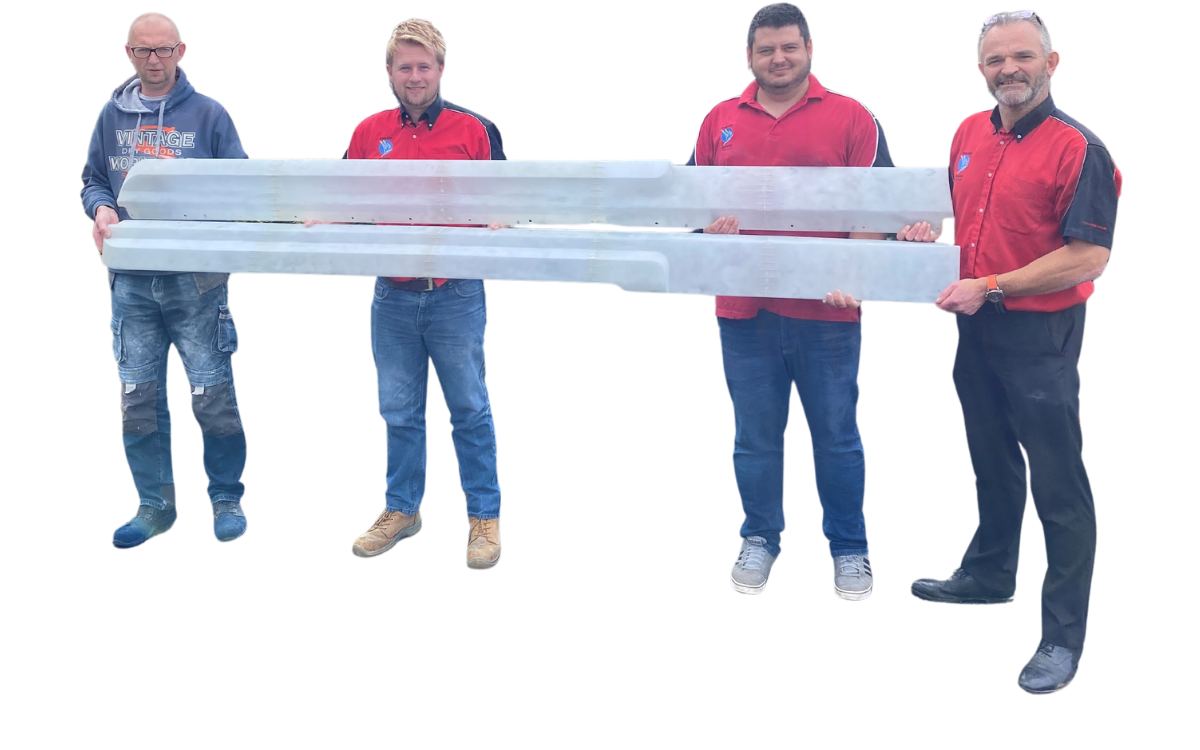
SLA for Large 3D Printed Parts
MNL boasts two of the UK’s largest resin 3D printers, producing exceptional quality large parts with super-fast turnaround times. Our NEO800 systems offer intricate detail and smooth sidewalls thanks to 1-micron scanning resolution and a variable spot-size laser. The spot-size laser goes small for intricate detail on the boundaries of parts and then it goes larger for filling in the rest of the section. As a result, we can produce intricate parts and reduce finishing times by up to 50%.
Virtually optically clear 3D Printing
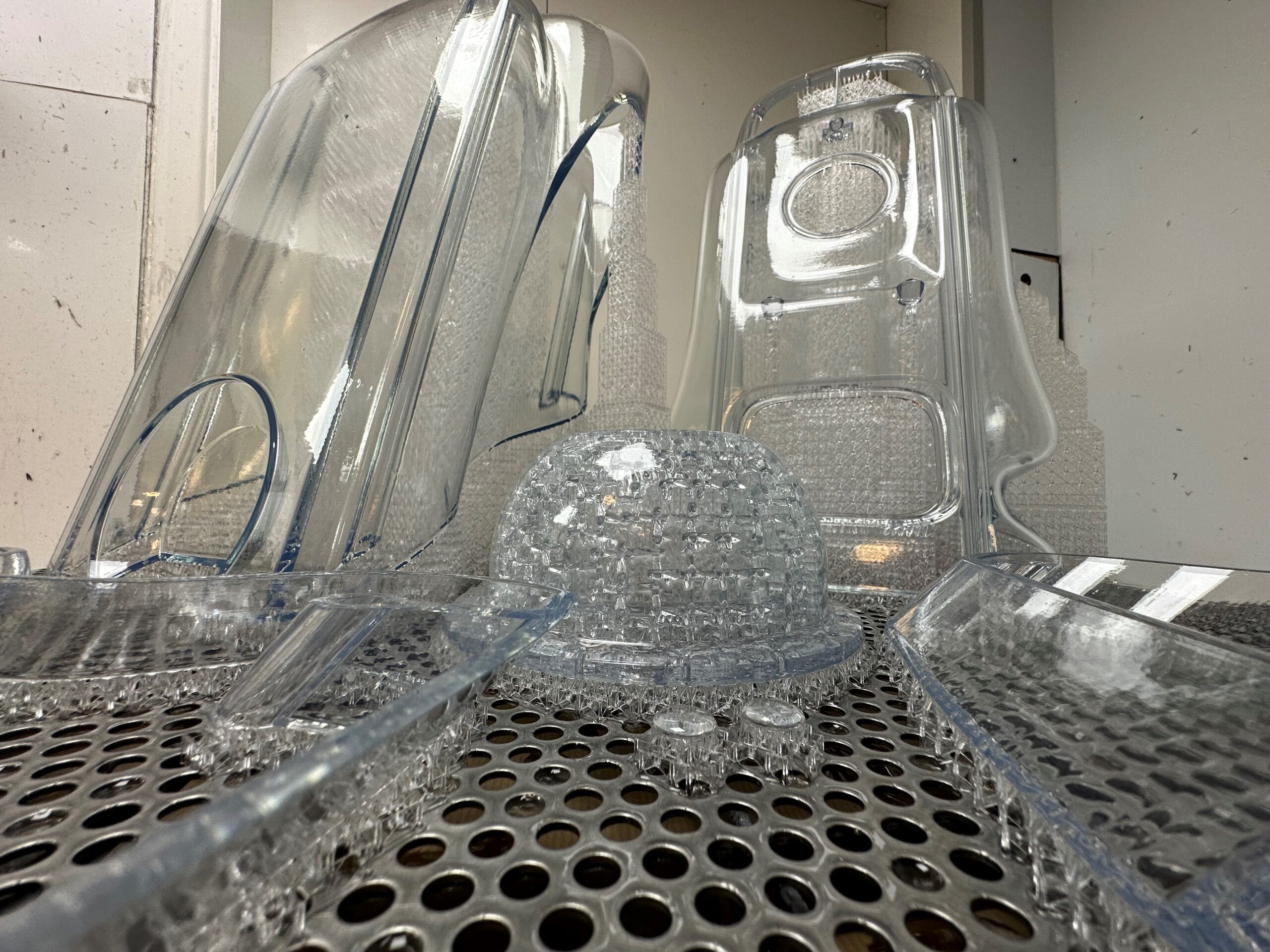
Our team of 3D printing experts have mastered virtually optically clear parts from our Stereolithography machines, we can help you see inside your assembly, utilised by many of our clients for flow testing and analysis as well as replicating glass for many designs. Glass like SLAs can be achieved with MNL not just for lenses and lighting based components.
Precision Finishing: From Raw SLA to Final Part
Post-processing is critical. Our team of traditional model makers provides the skilled finishing necessary to transform SLA prints into production-ready or presentation-ready components.
Specialised SLA Finishing Services
-
Virtually Optically Clear Parts: Our mastery of polishing techniques allows us to achieve glass-like transparency for lenses, light guides, and internal flow analysis models.
-
Painting & Tinting: Custom colour matching and high-end paint finishes for presentation-grade styling models and consumer prototypes.
-
Surface Preparation: Full sanding, sealing, and primer application to create a seamless surface, ready for final coating.
-
Metal Plating: Applying thin metal layers to enhance conductivity or durability.
Benefits of SLA Printing

Smooth Surface Finish
SLA prints have a smooth surface finish that requires minimal post-processing. This is because the resin is cured layer by layer, resulting in a seamless finish. We can also sand, paint and tint 3D models.

High Resolution
With a scanning resolution of within 1 micron, SLA parts are highly accurate. The Ultra Hi-res mode utilises the lasers extremely small spot size of just 0.075mm.

Complex Geometrics
SLA printing can create complex geometries that would be difficult or impossible to produce with other 3D printing methods. This is because the laser can cure the resin in any shape, creating intricate details.

Various Options
There is a wide variety of resins available for SLA printing, with different properties such as strength, flexibility, and biocompatibility. Our materials are extremely durable making them excellent for snap fits.
Virtually Optically Clear Parts
We have mastered virtually optically clear parts from our Stereolithography machines, to help you see inside your assembly.

Made in Hours
We can help with last minute projects and offer a fast turnaround. High quality SLA parts can be printed in a matter of hours.
Get a Quote for SLA Parts
Getting a quote for SLA printed parts is easy! Simply upload your 3D model file and receive a quote in minutes. We can also help with CAD drawings.
SLA Materials and Properties
We utilise industry-leading resins to meet a wide array of project requirements, categorised for performance.
Featured High-Performance Resins
| Material Name | Key Properties | Ideal Applications |
| Somos Watershed XC 11122 | Clear/Translucent, Water-Resistant, ABS Like properties, low moisture absorption. | Fluid flow analysis, lenses, light guides, transparent housings. |
| Somos Taurus | High Temperature Resistance, high strength, durable, dark colour. | Functional automotive components, complex enclosures, wind tunnel models. |
| High-Detail Resins | Exceptional resolution 1 -micron scanning), aesthetic quality. | Master patterns for Vacuum Casting, complex cosmetic prototypes. |
Why Malcolm Nicholls For SLA 3D Printing?
UK Based
With headquarters in the Midlands, we can deliver your 3D parts nationally.
Years of Expertise
We are a family run business with decades of experience.
Finished to Perfection
A team of traditional model makers in house to give your 3D print the wow factor.
More Than Just 3D Printing
With our suite of machines and technology we also specialise in low-volume manufacturing, Vacuum Casting, CNC Machining and more.
Trusted By Industry Leading Experts
SLA 3D Printing Applications
SLA 3D printing has many applications including:
Transparent 3D Printed Parts including lenses and light-guides
Masters for vacuum casting
Functional assemblies: Creating multi-part prototypes and end-use components.
End-Use Parts: In some cases, SLA can be used for low-volume manufacturing of functional parts.
Wind tunnel models
Creating functional prototypes and pre-production parts for design validation before mass manufacturing
Consumer Goods Prototypes: For form, fit, and function testing of new product designs, such as packaging, toys, or household items.
Complex Enclosures and Housings: For electronic equipment or consumer products requiring intricate shapes and smooth aesthetics.
Aerospace Components (Prototyping): Producing complex shapes for wind tunnel testing or initial fit checks of interior parts
Automotive Styling Models: Creating large, smooth exterior and interior components for design evaluation. patterns
Design evaluation models
Clear Flow analysis models
Which 3D Printing Service do I need?
Learn more about the different options we offer.
SLA
Stereolithography (SLA) also often referred to as SLA is the most widely used resin 3D printing technology. it is generally considered to provide the greatest accuracy and best surface finish of any prototyping or 3D printing process.
SLS
SLS can build functional parts, casting patterns and tooling inserts from your 3D CAD data. Our HiQ Sinterstation system (SLS 3D Printing machine) represents the future of Instant Manufacturing Technology.
FDM
Manufacturing FDM known as fused deposition modelling is the most widely available form of 3d printing. It is an additive manufacturing technology that selectively deposits molten plastic to build parts layer by layer.
When to Choose Our SLA 3D Printing Service
SLA is the ideal choice when your project requires the highest resolution and best surface finish available in additive manufacturing.
-
Master Patterns for Casting: SLA’s smooth finish and accuracy make it the perfect master pattern for our in-house Vacuum Casting processes.
-
Aerospace & Automotive Styling: Creating large, seamless components (e.g bumpers, dashboards) that require surface quality without seams.
-
Design Validation: Producing highly detailed components for fit, form, and function testing that demand aesthetic realism.
-
Flow Analysis & Lenses: Utilising clear resins and advanced polishing to create virtually optically clear parts for critical visualisation.
SLA FAQ’s
What is SLA 3D Printing & Stereolithography?
Stereolithography (SLA) also often referred to as SLA is the most widely used resin 3D printing technology and it is generally considered to provide the greatest accuracy and best surface finish of any prototyping or 3D printing process.
Stereolithography is an industrial 3D printing process used to create concept models, complex or even very intricate parts. It is a popular choice as many parts can be built in just a day! With MNL’s secondary finishing services such as painting and finishing we can make your part and the details within it really stand out.
How does SLA printing work?
A computer controlled UV laser beam scans across the surface of a vat of photosensitive resin that instantly turns the liquid to solid wherever it touches. Successive layers or slices of cured resin are gradually built up into a solid version of the intended CAD model until your part is complete.
Newly built parts are taken out of the SLA machine and taken into our processing room where solvents are used to remove any additional resins. The additional resin will all be removed so we can then remove any support structures manually. After the supports and all the resin has been removed the majority of parts will undergo a UV-curing cycle to fully solidify the outer surface of the part. If the part is a clear 3D printed part we will leave it to dry naturally.
The final step in the SLA 3D printing process is the application of any specified finishing touches such as metalising, painting, flocking or additional vinyls.
What does SLA mean in 3D printing?
Why choose to do your 3D printing via SLA?
Stereolithography or SLA is also an excellent choice for rapid prototyping and projects requiring the production of very accurate and finely detailed parts. Stereolithography prototyping is ideal for creating parts to demonstrate and validate concept ideas and ergonomic testing.
What steps are involved in SLA post processing?
- Washing Away Unwanted Resin: First, a bath in a solvent like isopropyl alcohol gently removes uncured resin clinging to the surface, ensuring precise details and smooth textures.
- Support Removal: Carefully removing the temporary support structures that held the part during the 3D printing process.
- Curing for Strength: Under a UV light or heat, the remaining resin undergoes a polymerisation process, transforming from a liquid state to a solid plastic, maximising your part’s durability and dimensional stability.
- Sanding and prep: If you have opted for a finished SLA (not a straight off the printer option) we will sand and prep your part. Sanding smooths out any surface imperfections
- Finishing (Optional): Depending on your desired outcome, we offer various finishing techniques, like painting or polishing, and we can personalise your creation for specific applications.
Post-processing plays a role in various 3D printing methods, though the specific steps and materials involved may differ. FDM (fused deposition modelling) and SLS (selective laser sintering) might involve post-curing and minimal finishing due to their inherent strength. Ultimately, the post-processing approach depends on the chosen technology, material, and desired outcome.
What is the difference between SLA and DLP 3D printing?
SLA offers high resolution and detail, and is ideal for intricate designs. DLP is faster for large prints, or for multiple identical parts. However, DLP has a slightly lower resolution.
Are SLA prints stronger than FDM?
What are the drawbacks of SLA printing?
While SLA printing excels in precision and detail, parts made with it can be less robust compared to methods like FDM.
If your prototype needs to handle significant physical stress or impact, FDM might be a better choice for its durability. For early-stage, non-functional prototypes where precise details and aesthetics are paramount, SLA’s strength limitations might be acceptable.
Is SLA 3D printing expensive?
When can my parts be delivered?
Want to know more about our SLA 3D printing service?
Stereolithography services at MNL are some of the most precise in the industry thanks to our top-of-the-line SLA machines. If you are in need of stereolithography prototyping or small production batches quickly and at an affordable cost, then our SLA prototyping services are perfect for you.
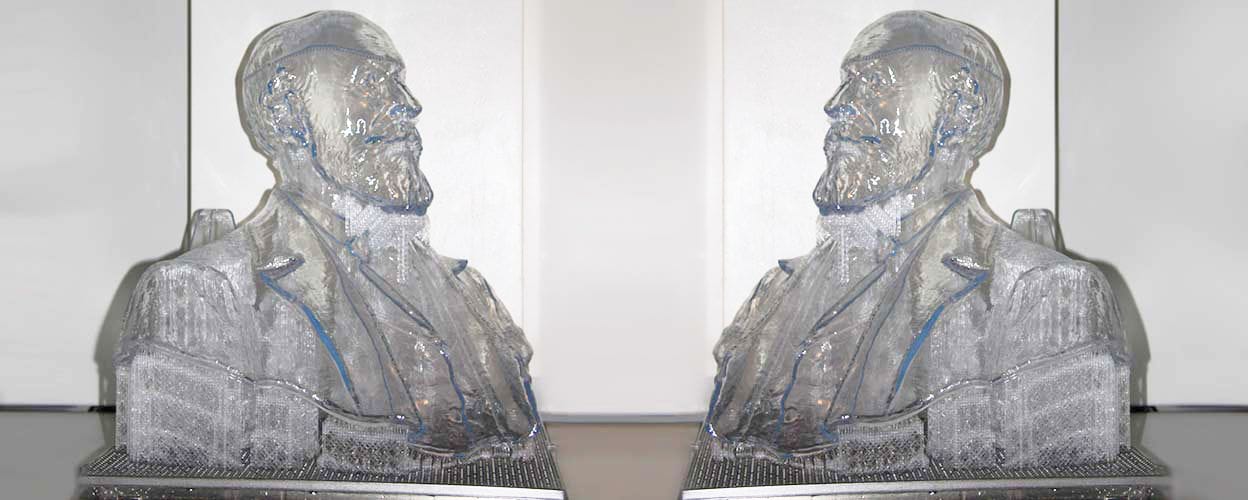
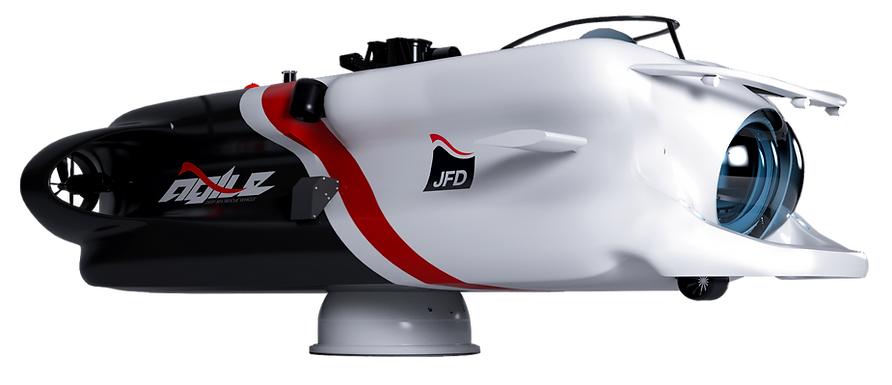
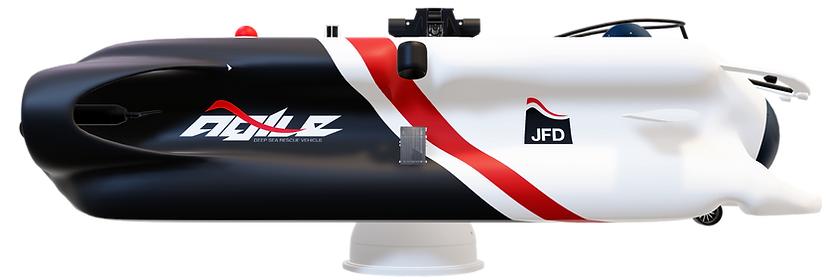
650mm Wide Size Bust on a Large SLA Printer
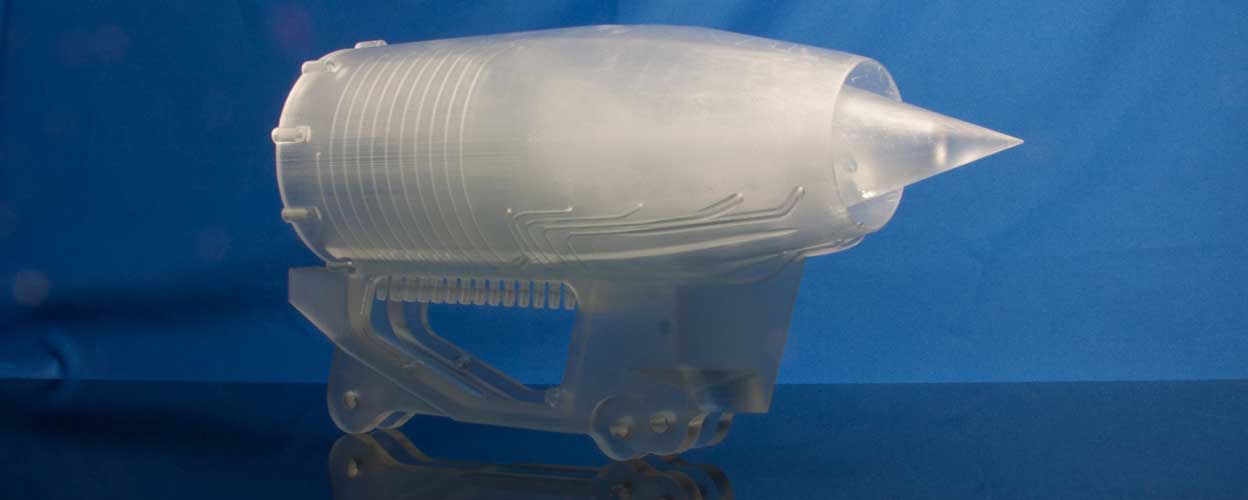
Wind Tunnel Model for High Speed Aerodynamic Testing
Order 3D Printed Parts
Getting a quote for your 3D printing project has never been easier. We offer three straightforward options to meet your needs.
Option One – Perfect for those seeking a swift and hassle-free 3D printing quote.
Option Two – If your project requires more than just printing, option two is your go-to choice, where we can provide quotes for CNC machining, surface finishing, vacuum forming, and vacuum casting for your 3D parts.
Option Three – For large, complex, intricate, or multi-part projects, look no further than option three. Give us a call, and our team will be more than happy to assist you in bringing your vision to life.
At Malcolm Nicholls Ltd, we make quoting fast, easy, and simple.
Get in touch
Address
Waterloo Industrial Estate, Waterloo Cres, Bidford-on-Avon, B50 4JH
Call Us
01789 490382
Email Us
quotes@mnl.co.uk